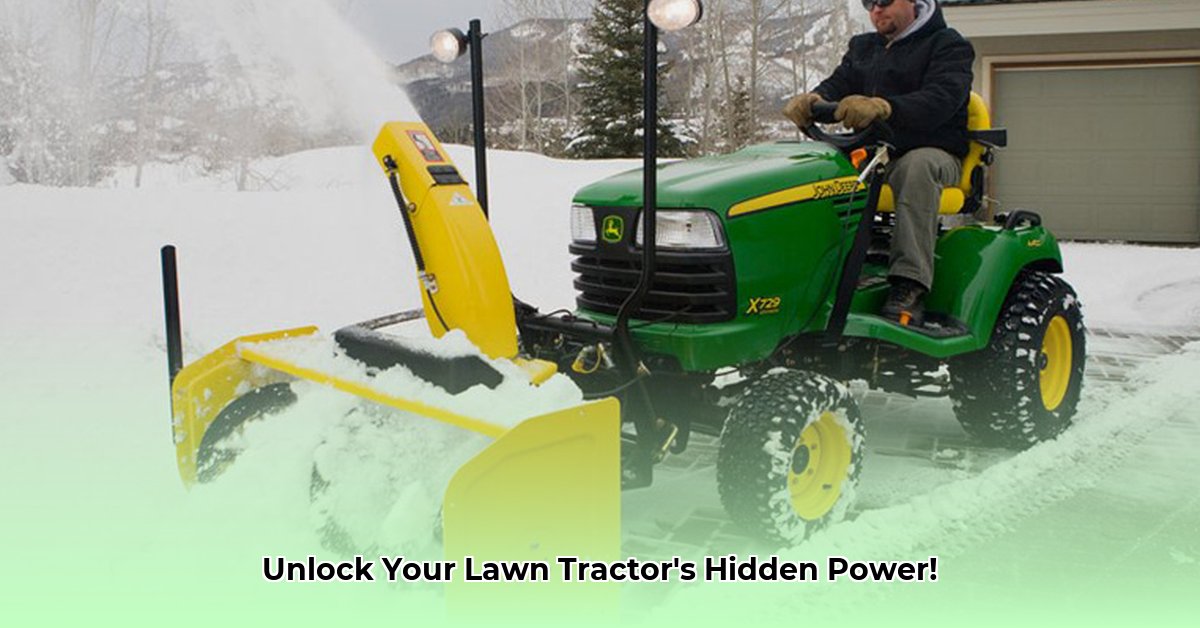
Choosing the Right Plow Blade for Your Needs
Transforming your lawn tractor into a snow-clearing machine begins with selecting the right plow blade. The wrong choice can mean inefficient snow removal, potential damage to your tractor, or even accidents. Consider these key factors:
Blade Width: A wider blade (e.g., 60 inches) covers more ground quickly, ideal for long driveways. However, maneuverability decreases in tighter spaces. Smaller blades (e.g., 42 inches) are better for smaller areas requiring more passes. Consider your property's size and layout when choosing the width. A 48-inch blade often offers a good balance for many residential properties. Larger blades (e.g., 72 inches) are usually reserved for larger properties or commercial use. Have you considered the dimensions of your driveway and yard? For added traction, consider installing tire chains.
Blade Material: Steel is the standard, offering superior strength and durability. Heavier gauge steel better resists damage from hidden rocks or hard-packed snow. While more expensive, it's a worthwhile investment for frequent or heavy snowfall usage. Lighter-gauge steel blades may suffice for occasional light snow removal. What will your typical snow conditions be?
Compatibility: This is paramount! Consult your lawn tractor's owner's manual; using an incompatible blade can damage your tractor or create dangerous operating conditions. The manual will specify the correct mounting system, hitch type, and blade dimensions. Never force a mismatched blade – it's a recipe for disaster. Does your manual specify required blade specifications?
Here's a comparison table. Remember, always defer to your owner's manual for precise compatibility specifications.
| Blade Width (inches) | Material | Typical Tractor Compatibility | Pros | Cons |
|---|---|---|---|---|
| 42 | Steel (light gauge) | Smaller Lawn Tractors | Lighter, easier to maneuver, more affordable | Less durable, might bend in heavy snow |
| 48 | Steel (medium gauge) | Many lawn tractors | Good balance of durability and maneuverability | A moderate price |
| 54 | Steel (heavy gauge) | Larger, heavier-duty tractors | Most durable, effective in heavy snow | Less maneuverable, higher price point |
| 60 | Steel (heavy gauge) | Larger, heavier-duty tractors | Excellent for heavy snow, larger properties | Requires a powerful tractor, higher cost |
| 72 | Steel (heavy gauge) | High-power tractors | Best for very large properties or commercial use | Requires a very powerful tractor, highest cost |
Installing Your Plow Blade: A Step-by-Step Guide
Safety is paramount. Always disconnect the tractor's PTO (power take-off) before attaching or adjusting the blade. This prevents accidental injuries.
Step 1: Preparation: Engage the parking brake firmly. Ensure the tractor is on a level surface. Lower the tractor's lift completely for stable access.
Step 2: Aligning the Blade: Carefully position the blade against the mounting points on your tractor. Ensure it’s correctly aligned. A misaligned blade is inefficient and could damage your tractor. Double check the alignment to prevent future operational issues.
Step 3: Secure Attachment: Use the provided bolts, washers, and pins to firmly attach the blade. Refer to your tractor's manual for torque specifications. Overtightening strips threads, while under-tightening leads to a loose blade. Each fastener must be securely fastened.
Step 4: Hydraulics (if applicable): Connect hydraulic lines (if your system uses them), following your tractor's manual precisely. This allows for angle adjustments during operation. Check for leaks before proceeding.
Step 5: Test the System: Raise and lower the blade several times. Listen for unusual noises (grinding or scraping). Address any problems before snow removal.
Operating Your Plow Blade: Mastering Snow Removal Techniques
Snow conditions greatly affect your plowing technique.
Light, Fluffy Snow: One or two passes typically suffice. A lower blade angle, slightly skimming the surface prevents excessive buildup.
Heavy, Wet Snow: Multiple passes might be necessary, possibly at a shallower depth to reduce strain. A higher angle might prevent buildup. Does a higher angle help prevent snow from clogging the blade?
Packed Snow or Ice: This is the most challenging condition. Multiple passes and a strategic blade angle are crucial. A combination of forward and reverse passes may be required. Consider using de-icer before plowing in extreme cases.
Maintenance: Ensuring Long-Term Performance
Regular maintenance prolongs your blade's life and improves efficiency.
Post-Use Cleaning: Remove snow, ice, or debris after each use using a stiff brush or scraper.
Lubrication: Lightly lubricate moving parts after each use (following your tractor’s manual). Did you know regular lubrication significantly reduces friction and extends component life?
Blade Inspection: Inspect the blade edge for nicks, damage, or excessive wear. A sharp blade is more efficient.
Sharpening: Professional sharpening is recommended for dull or chipped blades.
Troubleshooting Common Issues
- Blade Not Lifting: Check hydraulic fluid levels and look for leaks or blockages in the hydraulic lines.
- Blade Binding: This often indicates a problem with blade angle adjustment or an obstruction. Recheck alignment and remove obstructions carefully.
- Unusual Noises: Grinding, scraping, or other noises indicate potential problems and require attention. Stop using the blade immediately.
Safety Precautions: Prioritize Your Well-being
- Protective Gear: Eye protection, gloves, and sturdy footwear are essential. Consider a hard hat.
- Awareness: Be aware of obstacles, uneven terrain, and hazards (buried wires). Slow down near obstructions.
- Children and Pets: Keep them far away from the operating area. This is crucial for safety.
- Slope Caution: Avoid steep slopes; the risk of rollovers significantly increases.
Conclusion
Your lawn tractor plow blade is a powerful tool. Use this guide safely and effectively. Always consult your tractor and plow blade manuals for detailed instructions and seek professional help when needed. Remember, preparation and maintenance are key to efficient and safe snow removal.